ENTERPRISE E-LEARNING PLATFORM
At Cisco Systems, I led the redesign of the CX Training Suite — a collection of legacy applications used by enterprise teams worldwide to find, consume, create, and manage technical learning content. The platform spanned a content catalog, learning management system, and quiz and survey tools — each in need of a ground-up UX overhaul.
The process moved from deep user research and persona development through wireframes, high-fidelity mockups, and clickable prototypes — validated at every stage with real stakeholders and end users.
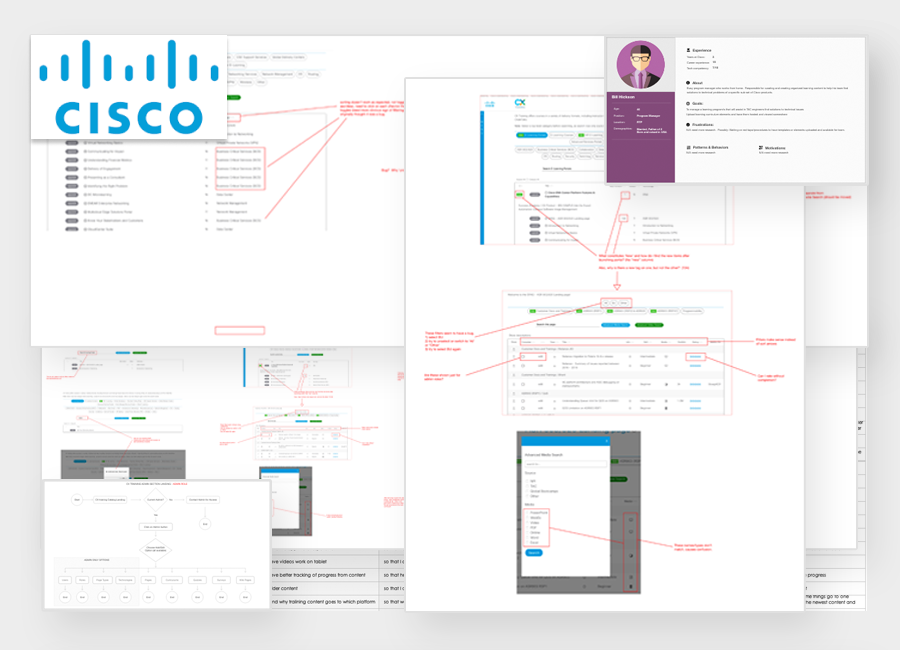
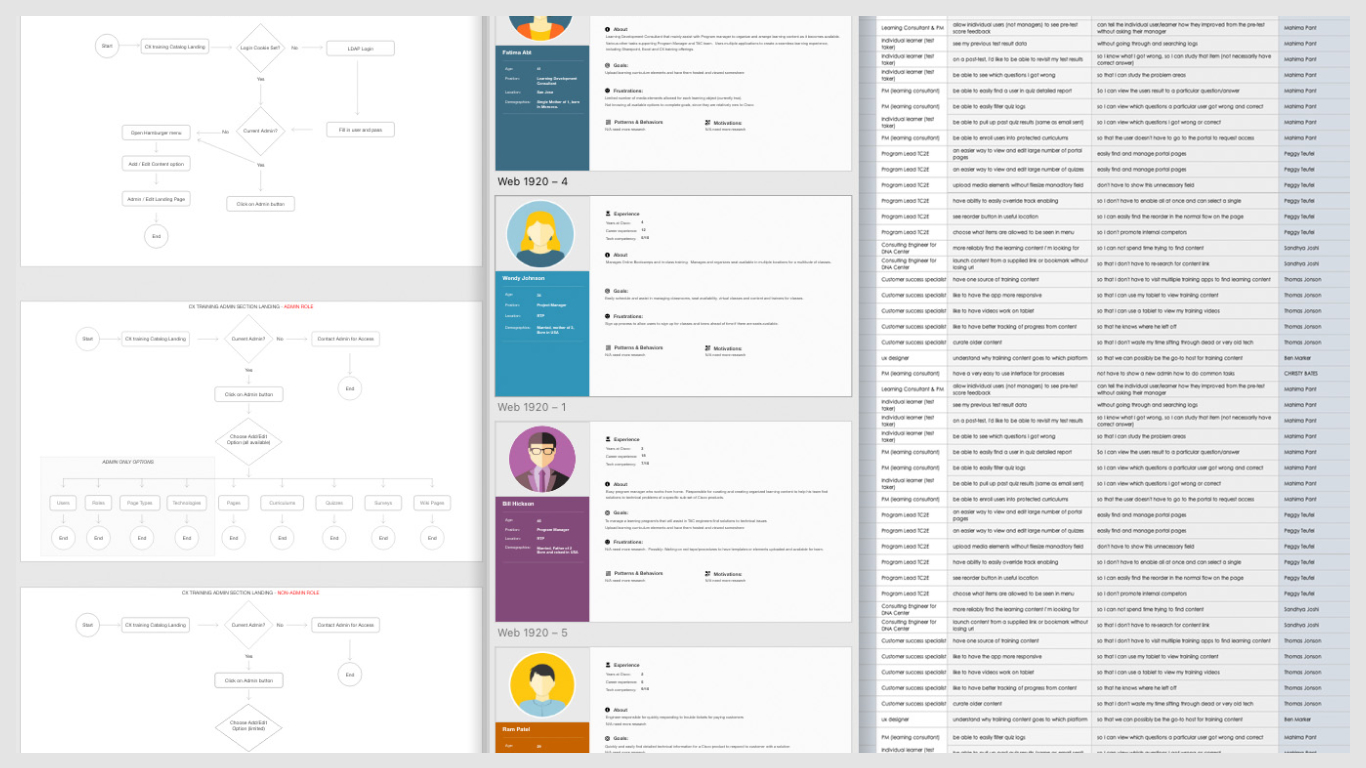
SITE MAPPING, PERSONAS, INTERVIEWS & USABILITY TESTING
Virtually all applications needed a major overhaul after unmoderated user tests — conducted both in-person and virtually. I researched, interviewed, and surveyed users while digging through analytics to build an accurate picture of how the suite was actually being used.
Results uncovered major pain-points and clear opportunities for improvement. These fed into targeted personas, user flows, and a baseline data set for future iterations — ensuring every design decision was anchored to real behavior, not assumptions.
FROM LO-FI CONCEPTS TO CLICKABLE PROTOTYPES
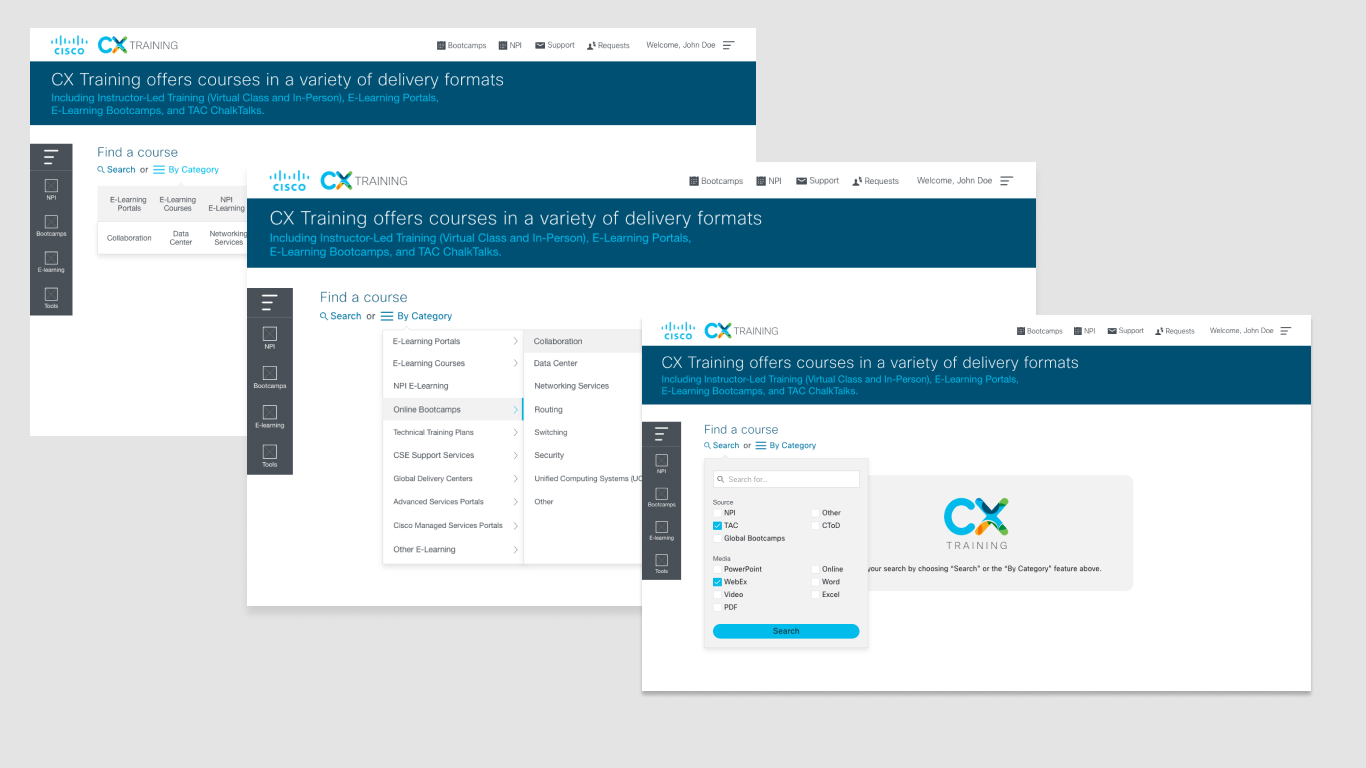
A comprehensive overhaul of how users find, filter, and consume courseware. Improved text-based search, category filtering with breadcrumbs, and table-level sorting give users direct access to related content based on their needs — replacing a confusing, siloed experience with a unified, intuitive flow.
The design evolved from ideation sketches to wireframes to high-res mockups and clickable prototypes — validated with users at each stage. Technologies used: Adobe XD for design, React front-end overhaul with a new Elastic Search instance for results.
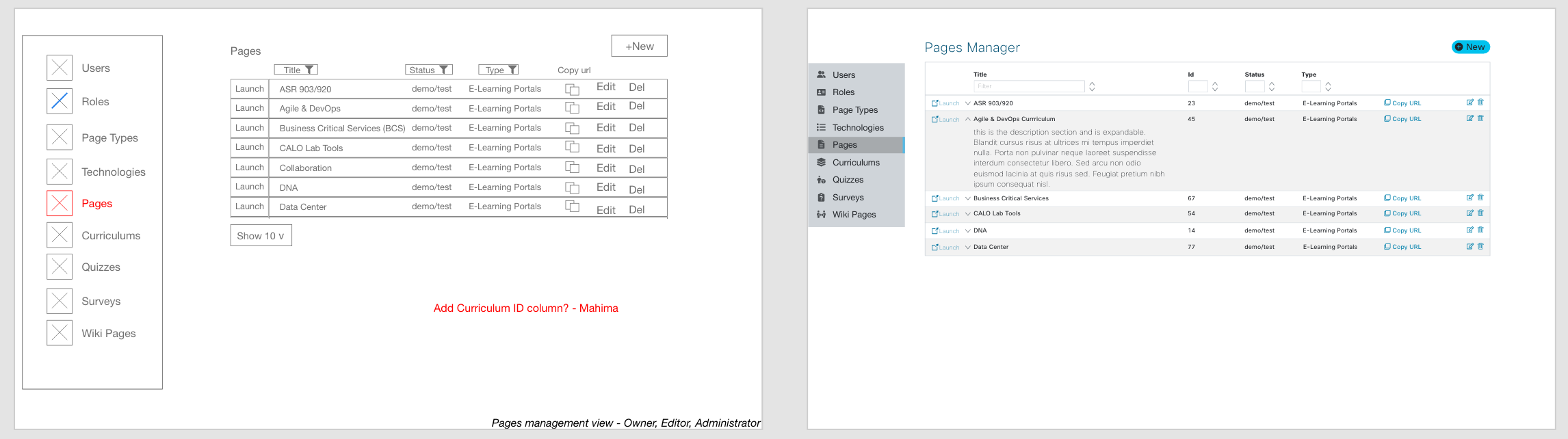
The design process moved from empathy and research through ideation, wireframes, lo-fi mock-ups, hi-res screens, and clickable prototypes — making the best quality applications and experience.
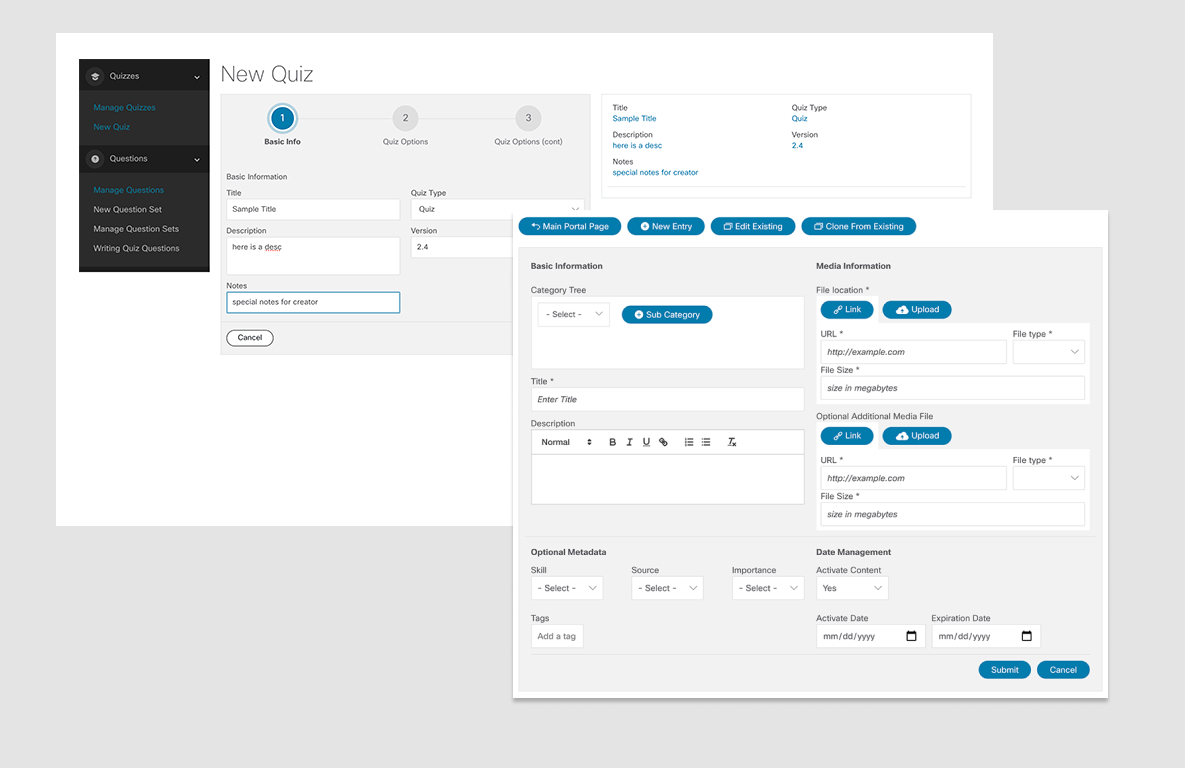
CONSISTENT UX ACROSS THE FULL SUITE
Merged User-Centered Design and Design Thinking methodologies to create interfaces with a consistent look and feel across the entire suite. The goal was to let users accomplish complex business tasks — from quiz creation to media uploads to content management — in an efficient, intuitive manner.
Close collaboration with multiple stakeholders and end users throughout the process ensured designs held up under real-world conditions and business requirements.
STAKEHOLDER PRESENTATIONS AND ONGOING TESTING
After progressing through the full UX journey, results were delivered and presented to stakeholders across the company. Multiple design options were provided to allow critique, evaluation, and comparison — giving stakeholders meaningful agency in the final direction.
The work didn't stop at handoff. Ongoing user testing and feedback loops continued to refine the experience as the platform grew, ensuring the suite remained aligned with how enterprise teams actually worked.